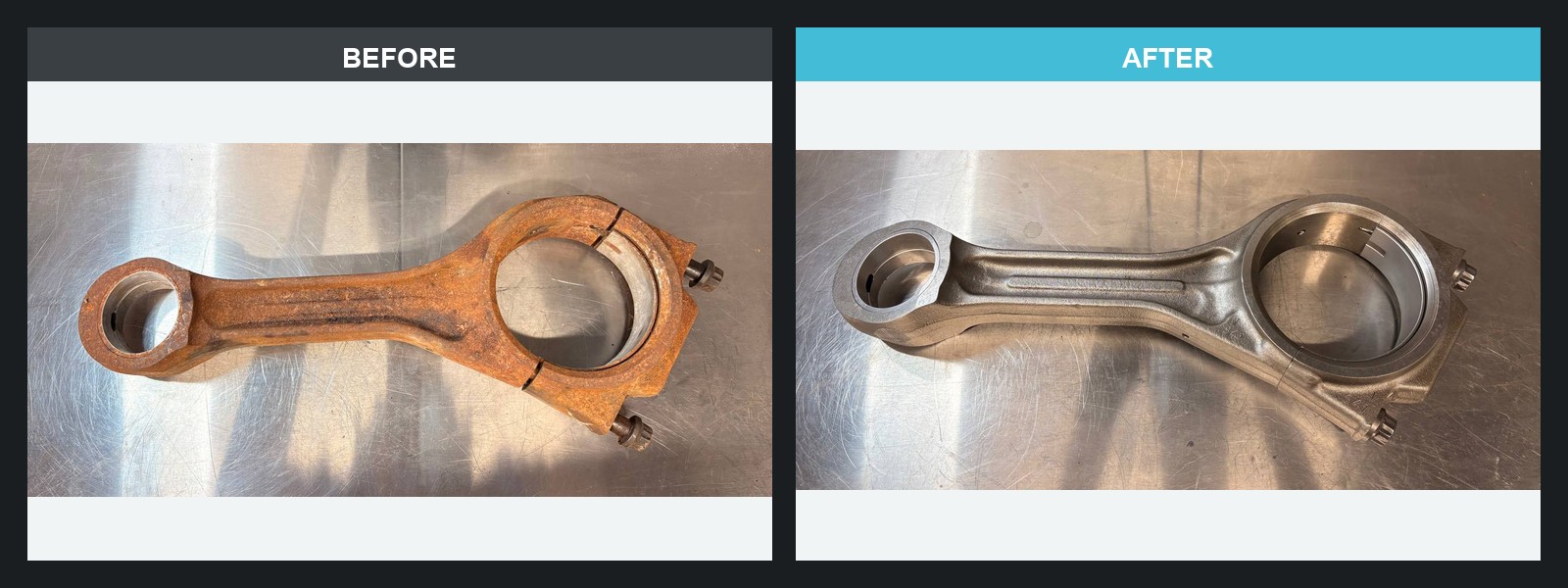
This large steel connecting rod measured approximately 30cm long and arrived with extensive orange-brown surface rust across the exposed body, recessed rib and big-end cap. VMC vapour blasted the component, leaving a cleaner and more consistent grey metallic appearance. ACF-50 was then applied to help inhibit further corrosion because the steel was remaining unpainted and uncoated.
This case study shows the visible surface-cleaning result only. Vapour blasting does not repair corrosion damage, replace lost metal or prove that an engine component is crack-free, dimensionally correct or mechanically serviceable.
The component before vapour blasting
The before photograph shows widespread visible oxidation over most of the exposed exterior. Rust is present across the shank, around both circular ends and over the split big-end cap, with darker deposits in the recessed central section.
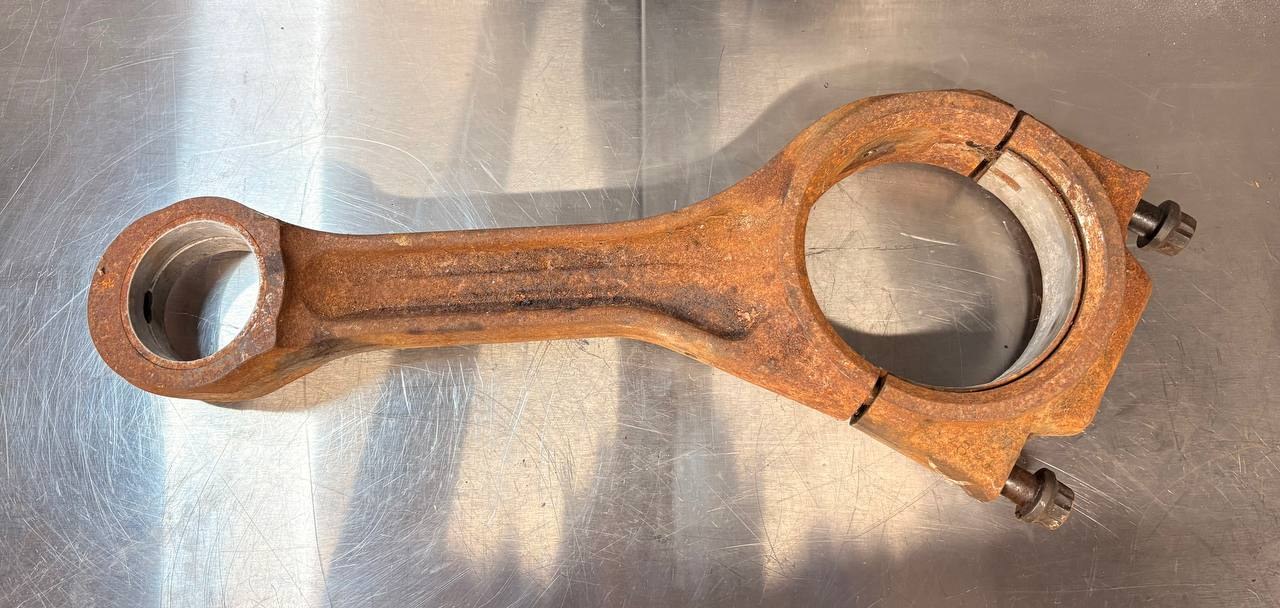
Before: widespread surface rust and darker contamination were visible across the conrod's exposed body and recessed areas.
The result after vapour blasting
In the after photograph, the obvious orange-brown surface rust is no longer visible across the exposed body. The component has a more consistent grey metallic appearance, while its original textured surface, machined areas and markings remain visible.
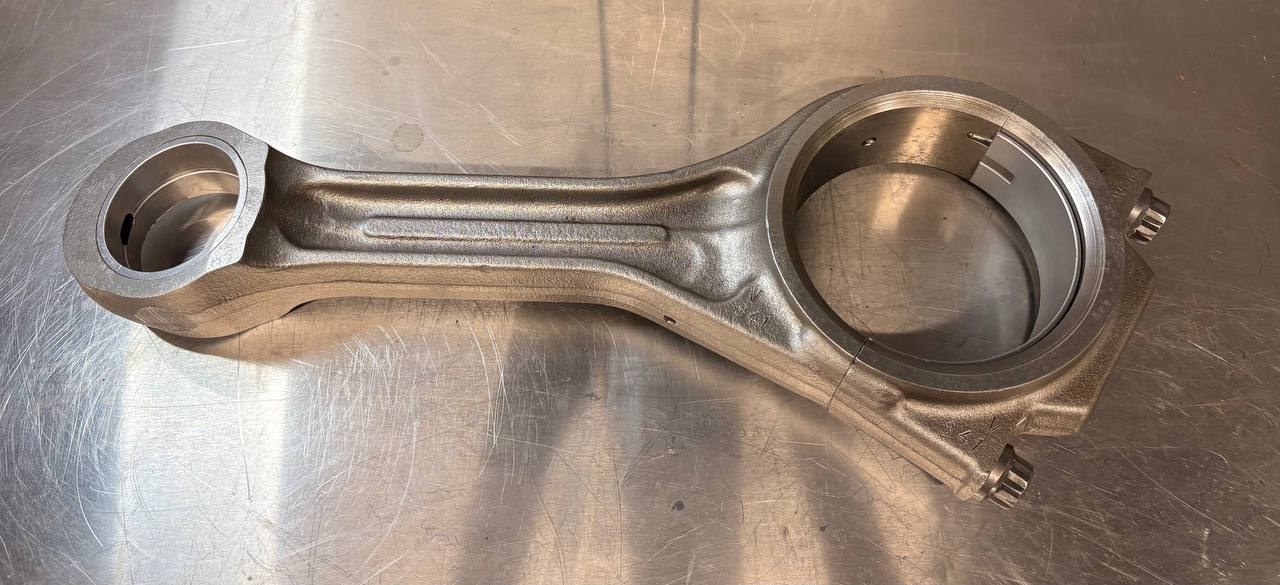
After: the exposed body has a cleaner, more uniform metallic appearance. ACF-50 was applied afterwards to help protect the suitable unpainted steel surface.
Blasting can reveal the true condition of a corroded surface, but any existing pitting, wear, cracking, distortion or dimensional change requires separate inspection. The photographs do not establish whether the component is ready to use.
Why was ACF-50 applied?
Clean steel can begin to corrode again when it is exposed to moisture, condensation, salts or unsuitable storage. Vapour blasting removes surface contamination; it is not itself a permanent protective coating.
For this job, VMC applied ACF-50 after blasting because the suitable steel component was to remain unpainted and uncoated. ACF-50 is a corrosion-inhibiting treatment: it helps protect the surface but does not guarantee that rust can never return. Ongoing condition checks and reapplication may be required according to the product instructions, use and storage environment.
VMC does not apply ACF-50 to a part that is going on to paint, powder coating or another treatment, because residual corrosion inhibitor may conflict with the next finishing process.
Can rusty steel be vapour blasted?
Some suitable steel parts can be vapour blasted, but the correct process depends on the component, corrosion, geometry and finish required. VMC also offers dry abrasive blasting, which may be the more appropriate route for robust steel or cast-iron parts with heavier rust, scale or paint.
This connecting rod was vapour blasted by VMC. It is a real job example rather than a promise that every rusted steel component will follow the same process.
Compare vapour blasting and dry abrasive blasting →
Preparation matters
Parts normally need to arrive fully stripped and ready to go straight into the blaster. Bearings, seals, bushes and anything else that fine media could affect must be removed. VMC cannot rely on masking to keep fine media out of fitted items, internal passages or sensitive areas.
For a similar component, send clear photographs showing the complete part, corrosion and pitting, bores and machined faces, passages and recesses, any fitted items, approximate dimensions and the finish required.
See how to photograph parts for a VMC quote →
Send photographs for an assessment
VMC quotes from photographs because size, material, condition, complexity and preparation all affect process suitability and price. Send clear images by WhatsApp or email and explain what will happen to the component after blasting.
Frequently asked questions
Does vapour blasting permanently stop steel from rusting?
No. Vapour blasting cleans the surface but is not a permanent protective coating. Bare steel needs a suitable aftercare or finishing plan.
Does ACF-50 guarantee that rust will not return?
No. ACF-50 is a corrosion-inhibiting treatment rather than a permanent coating or guarantee. Ongoing protection depends on application, use, handling, storage and maintenance.
Can VMC apply ACF-50 before painting or powder coating?
No. VMC offers ACF-50 only for suitable steel parts that will remain unpainted and uncoated.
Does the after photograph prove that the conrod is mechanically serviceable?
No. The photographs demonstrate visible surface cleaning only. Mechanical inspection, measurement, crack detection and any repair are separate requirements.