Vapour Blasting & Wet Blasting for Metal Components
Vapour blasting — also called wet blasting or aqua blasting — uses water, fine abrasive media and compressed air to clean suitable aluminium and metal components with a controlled satin finish. Send photos first for suitability, price and turnaround.
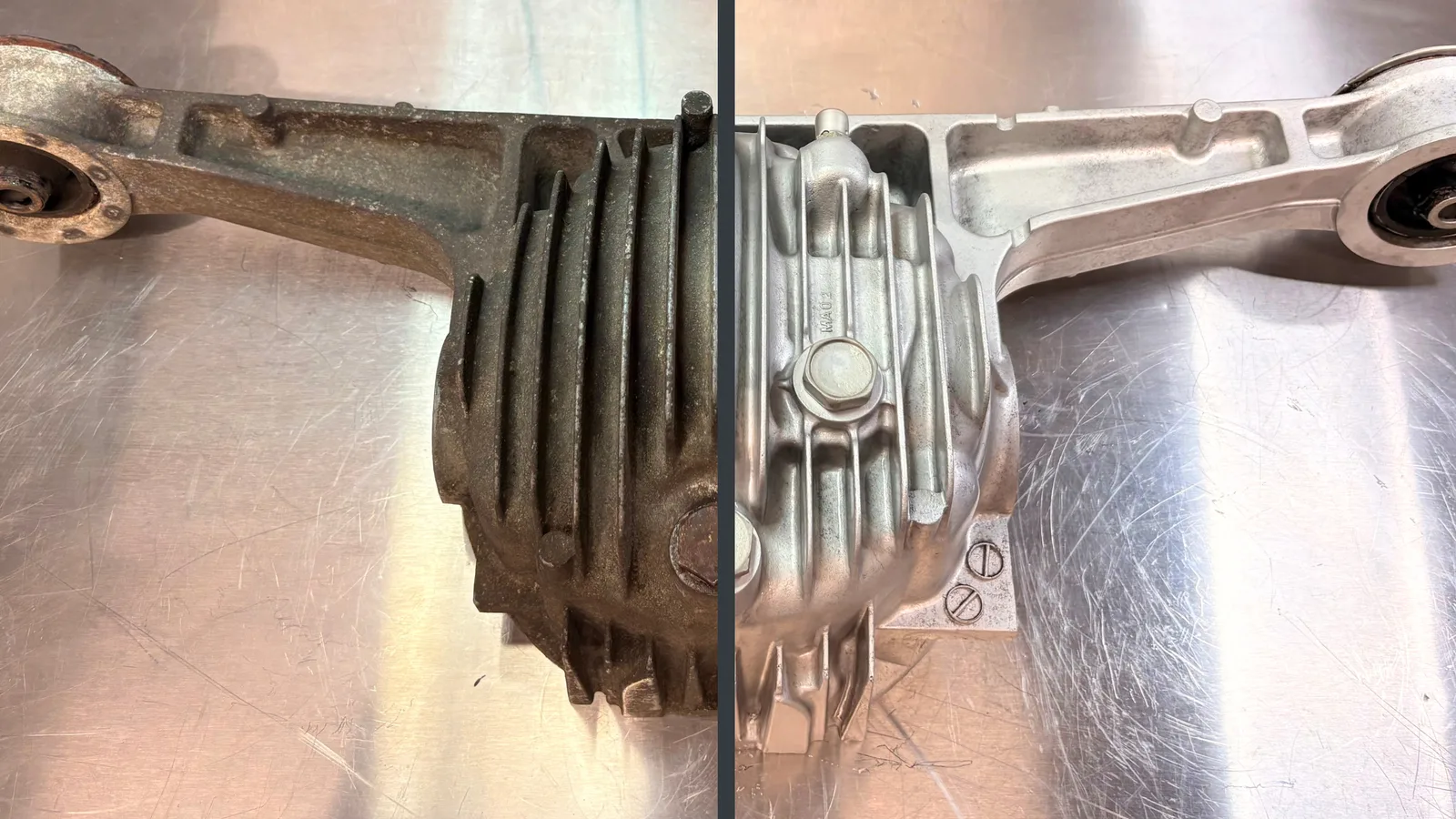
Vapour blasting uses water, fine media and air for a controlled clean finish.
Vapour blasting, also called wet blasting or aqua blasting, mixes water, fine abrasive media and compressed air inside a controlled blasting cabinet. The water cushions the abrasive action, helps control dust and produces a consistent satin finish on suitable metal parts.
For owners, restorers and workshops, the point is simple: clean parts properly without the aggressive impact associated with many dry blasting jobs. That makes vapour blasting especially useful for suitable aluminium engine cases, carburettor bodies, cylinder heads, gearbox casings, manifolds, brake calipers and restoration castings.
VMC is a Lincolnshire workshop, not a walk-in counter. Send photos first so Charlie can assess material, size, corrosion, paint, contamination, masking needs, price and turnaround before any work is booked.
Send clear photos before visiting.
- 1. Photograph the whole part
Include all sides and scale where possible. - 2. Show problem areas
Close-ups of corrosion, paint, grease, damage or delicate surfaces help quote accurately. - 3. Confirm size and material
Approximate dimensions and known material save back-and-forth. - 4. Wait for assessment
VMC confirms suitability, price guidance and whether appointment drop-off or agreed post-in is appropriate.
Three common names for the controlled wet blasting process.
Customers use the terms vapour blasting, wet blasting and aqua blasting for the process that combines water, fine abrasive media and compressed air. VMC assesses the component and required finish rather than the wording used in the enquiry.
The process is commonly considered for suitable aluminium engine cases, carburettor bodies, cylinder heads, gearbox casings, manifolds, brake components and restoration castings.
Help VMC assess the part accurately.
- Part type and approximate dimensions.
- Material, if known.
- Paint, corrosion, grease or contamination.
- Threads, faces or areas requiring protection.
- Quantity and required turnaround.
Clean, even results for restoration, engineering and trade parts.
Vapour blasting is chosen when the finish matters and the component needs a controlled process rather than a harsh dry blast.
Gentler on suitable aluminium
Good for many aluminium castings, engine cases, covers and carburettor bodies where the aim is a clean satin finish.
Reduced dry-blast impact
The water in the process cushions the abrasive action and helps reduce the risk of aggressive surface damage on suitable parts.
Workshop quote control
Every job is assessed from photos so price, prep, masking, turnaround and suitability are clear before work starts.
Parts VMC regularly assesses for blasting.
Use these guides if you already know what you need cleaned, or send photos if you are not sure.
Before-and-after wet vapour blasting results.
Real components processed by VMC in the Lincolnshire workshop.
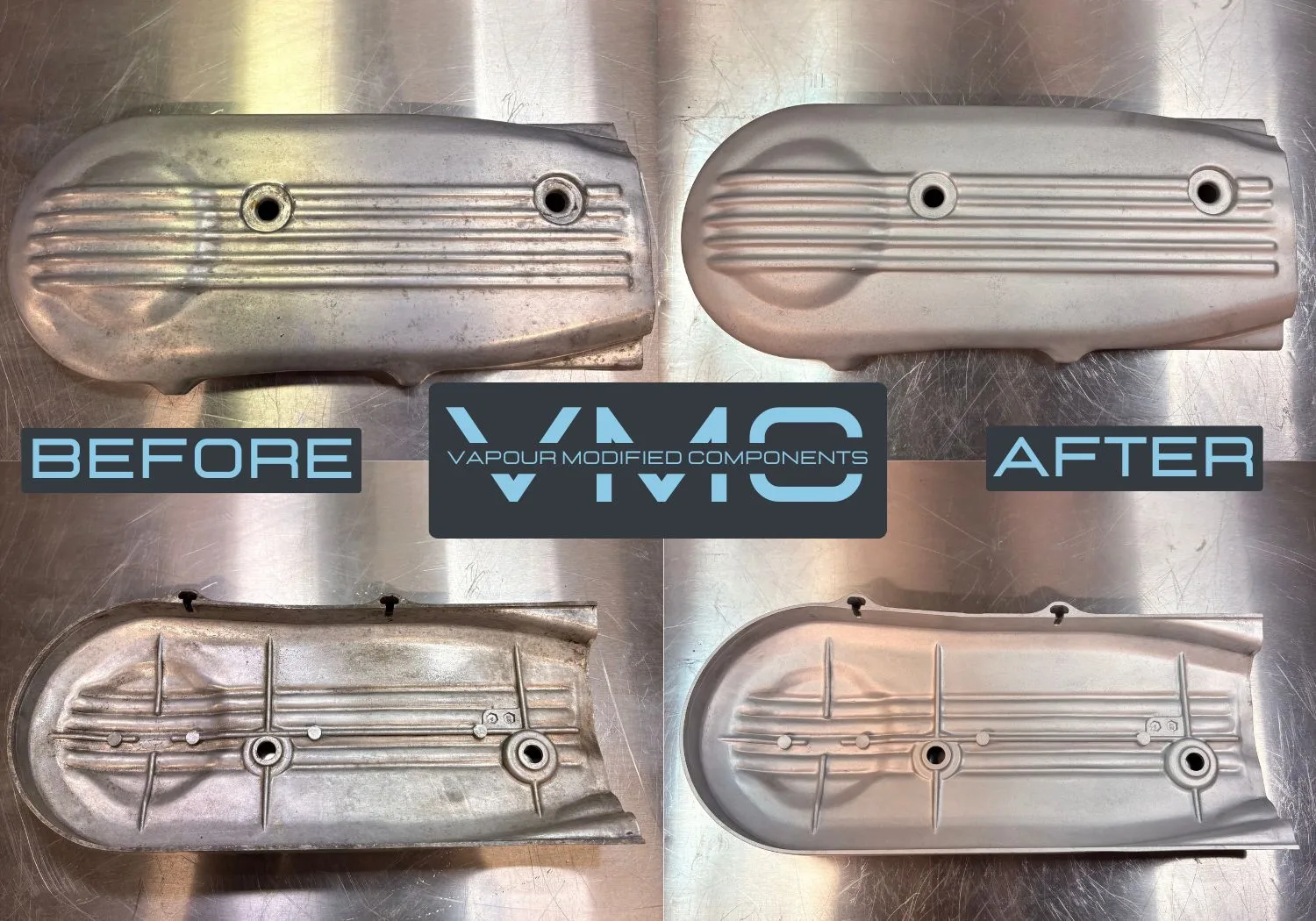
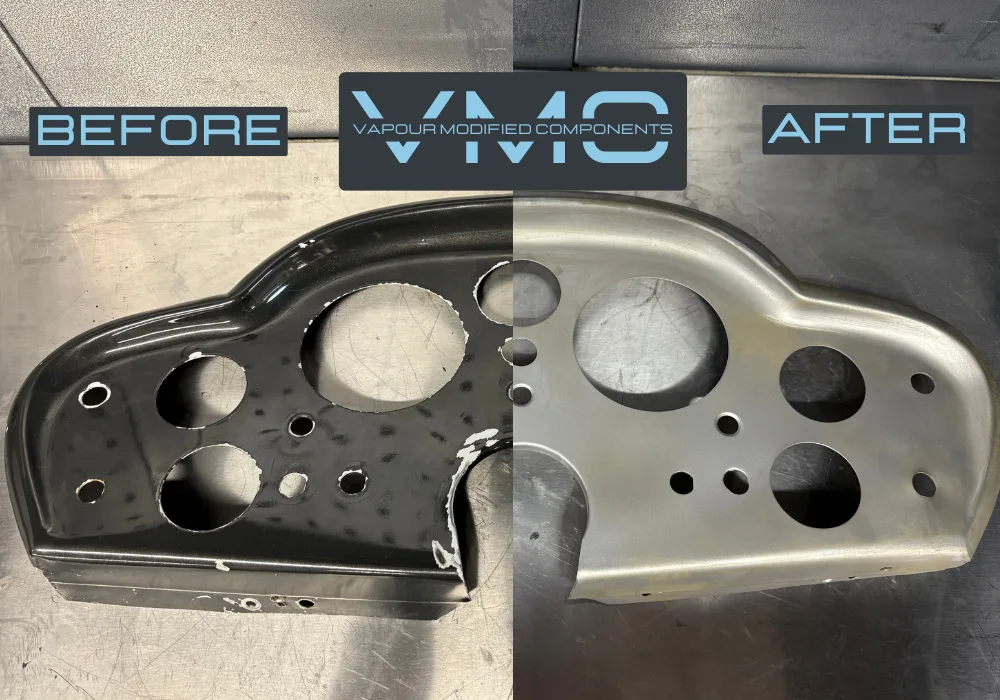
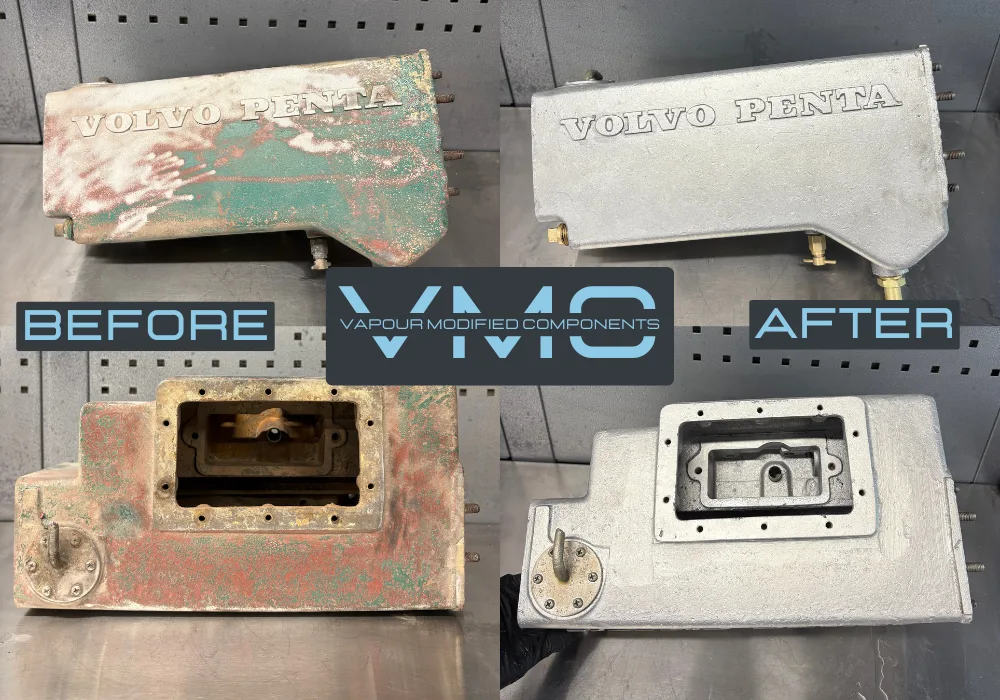
Choosing between wet and dry abrasive blasting.
Vapour or wet blasting is commonly chosen for suitable aluminium and restoration castings where a controlled satin finish is required. Dry abrasive blasting is a separate VMC process for suitable robust steel and cast-iron components where paint, rust or scale removal is the priority.
If your part is painted, heavily corroded, greasy, delicate, assembled, threaded or has masking requirements, mention that when sending photos. Prep time and complexity affect quote and turnaround.
Read the rust, paint and corrosion guideSee the 30cm steel conrod case studyRead vapour blasting vs sandblastingView dry abrasive blastingSuitability comes first.
- Material and condition.
- Size and whether it fits the equipment.
- Paint, corrosion, grease or contamination.
- Threads, faces, masking or delicate areas.
- Quantity, deadline and trade-repeat needs.
VMC does not invent fixed prices from a keyword. A firm quote comes after photos and job assessment.
Common questions before sending parts.
What is vapour blasting?
Vapour blasting is a wet blasting process using water, fine abrasive media and compressed air to clean and finish suitable metal components.
Is vapour blasting safe for aluminium?
It is commonly used for suitable aluminium parts because it is controlled and less aggressive than many dry blasting methods, but every part still needs assessment.
What parts can VMC vapour blast?
Typical work includes engine cases, carburettors, cylinder heads, gearbox casings, manifolds, brake calipers, marine fittings, agricultural components and trade batches.
How much does vapour blasting cost?
Pricing depends on size, condition, complexity, quantity and prep required. Send photos for a firm VMC quote.
How long does vapour blasting take?
Most suitable jobs are typically completed in 1–4 working days, subject to workload, condition and preparation.
Can I post parts to VMC?
Drop-off by appointment is preferred. Post-in or return courier handling is only arranged by prior agreement for suitable jobs.
Need vapour or wet blasting for your parts?
Send clear photos now and VMC will confirm suitability, price and turnaround before any work starts.