The short answer is that it depends on the material, the type of contamination and the finish required. Vapour blasting is well suited to cleaning many oxidised aluminium castings and suitable metal components. Heavier rust, paint and scale on robust steel or cast-iron parts may be better suited to dry abrasive blasting or additional preparation.
VMC offers both vapour/wet blasting and dry abrasive blasting. Send clear photographs and VMC can assess which available process is more suitable for the component and required result.
Does vapour blasting remove rust?
Rust forms on iron and steel. Vapour blasting may clean some light surface contamination, but it is not automatically the most efficient process for every rusty component.
For heavier rust or scale on suitable robust steel and cast-iron parts, dry abrasive blasting is usually the more relevant VMC service to assess. The dry process is intended for suitable components where removal of rust, scale, paint or heavier surface contamination is the priority.
Removing rust also does not replace metal that has already been lost. If corrosion has caused pitting, the surface can be cleaned while the pits remain visible. Photographs help VMC judge whether blasting is suitable and what result is realistic.
Read about VMC dry abrasive blasting →
See a real VMC 30cm steel connecting rod before and after vapour blasting and ACF-50 treatment →
Does vapour blasting remove corrosion from aluminium?
Aluminium does not rust in the same way as steel, but it can oxidise, stain and corrode. On many suitable aluminium components, vapour blasting can clean surface contamination and reduce or remove visible surface oxidation, depending on the alloy and condition, while producing a controlled satin appearance.
Common examples include suitable:
- Engine cases and covers
- Carburettor bodies
- Cylinder heads
- Gearbox casings
- Manifolds
- Motorcycle and classic-car castings
Suitability still depends on the alloy, condition, geometry and any precision-related surfaces. Deep pitting, cracks, previous repairs or damaged metal will not be restored simply by cleaning the surface.
Learn more about aluminium vapour blasting →
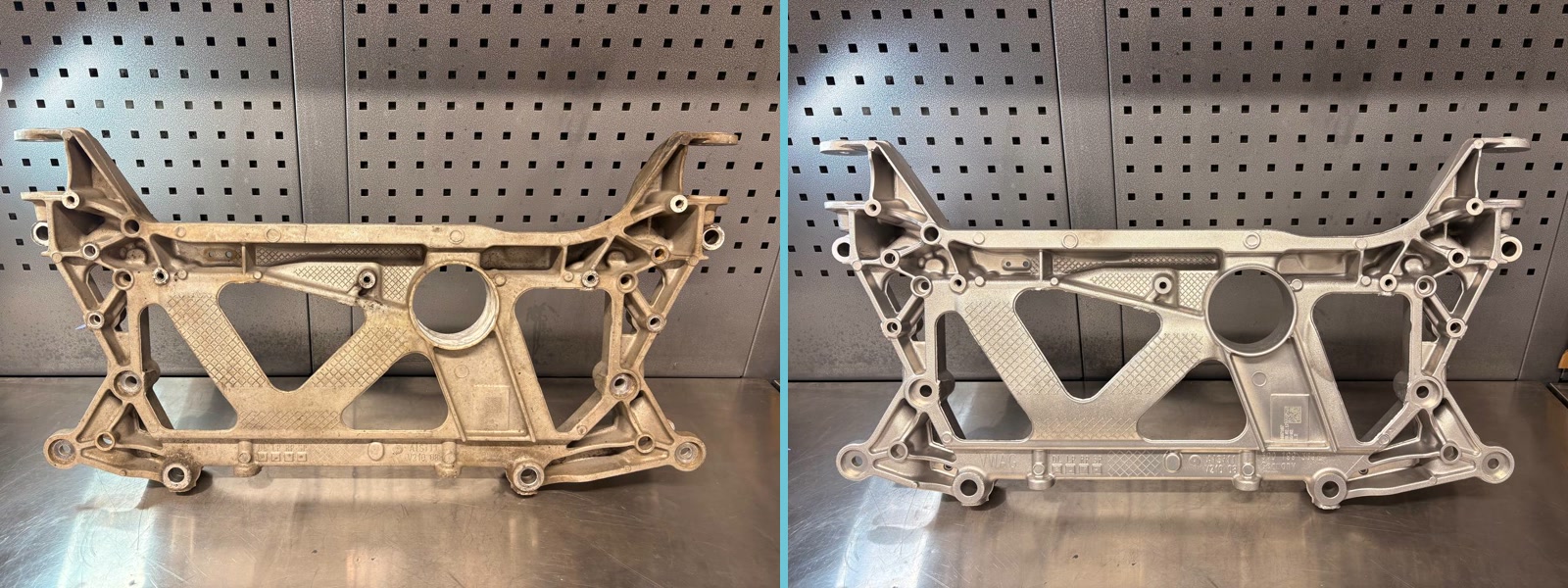
Real VMC example: cast-aluminium automotive subframe
This large cast-aluminium automotive subframe or crossmember-type component arrived with a dull, uneven surface, road grime, dark deposits and visible oxidation across the casting and its recesses. The visible VW AG marking identifies it as a Volkswagen Group component, but the photographs do not support naming a specific vehicle model.
Before vapour blasting
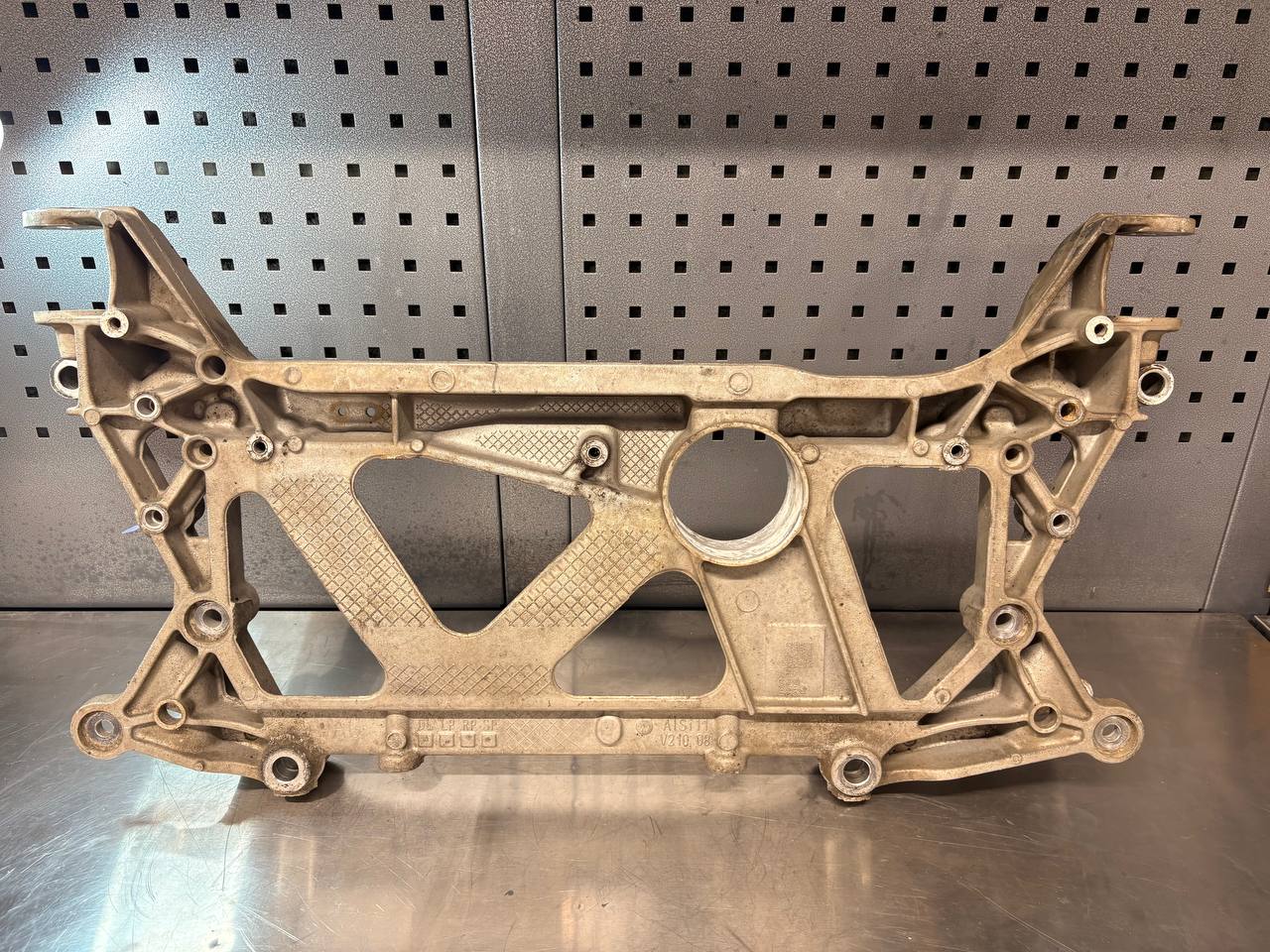
Before: the casting had an uneven, contaminated appearance, with grime and oxidation visible around its ribs, bosses and recessed areas.
After vapour blasting
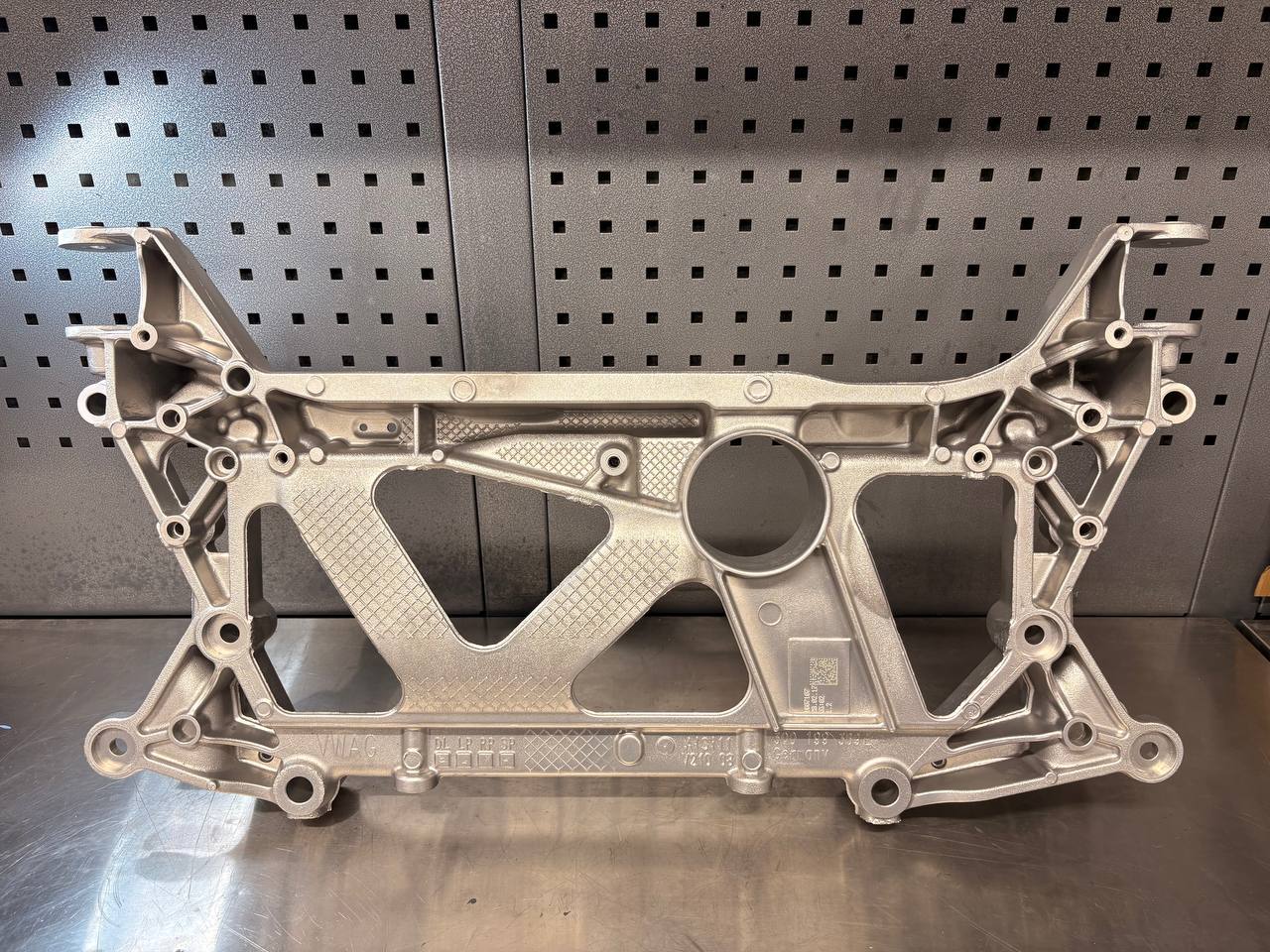
After: the exposed casting has a cleaner, more consistent silver-grey satin appearance while retaining its original cast texture and identification marks.
The photographs demonstrate surface cleaning and visual improvement only. Vapour blasting does not prove that a structural component is crack-free, straight, dimensionally correct or mechanically serviceable. Inspection, measurement and any repair remain separate responsibilities.
Every part must still be supplied fully stripped and ready to go straight into the blaster. If fine media could affect a fitted item, internal passage or sensitive feature, that issue must be resolved before VMC accepts the component.
Will vapour blasting remove paint?
Paint must be assessed rather than treated as a simple yes-or-no question. The answer can depend on:
- The paint or coating type
- The number and thickness of the layers
- How well the coating is bonded
- The material underneath
- Whether the required outcome is a clean satin finish or preparation for another coating
- Whether the part includes threads, machined surfaces or areas where fine media could cause a problem
Loose, failing or relatively light coatings may behave differently from tough multilayer paint or powder coating. VMC can use paint stripper where required before blasting, while robust steel or cast-iron parts may instead be assessed for dry abrasive blasting.
Paint removal adds preparation time and can affect the quote. Do not send a painted component without showing and describing the coating during the initial photo assessment.
What about powder coating?
Powder coating can be durable and may require more preparation than light or failing paint. VMC needs photographs and details of the base material before deciding whether paint stripper, dry abrasive blasting or another route is appropriate.
Blasting is not suitable for every material or assembly. The aim is to choose the process that removes the unwanted coating without using an unnecessarily aggressive method on the component underneath.
Vapour blasting or dry abrasive blasting?
Neither process is universally better. For many suitable aluminium castings, vapour blasting is considered where cleaning and a controlled satin appearance matter. For heavier paint, rust or scale on suitable robust steel and cast iron, dry abrasive blasting is usually the more relevant service.
Parts must arrive ready to go straight into the blaster. Bearings, seals, bushes, assemblies or anything else that could be affected by fine media must be removed beforehand. VMC cannot rely on masking or securing areas because the media is fine enough to travel everywhere.
Read the full vapour blasting versus sandblasting comparison →
What vapour blasting cannot repair
Blasting cleans and prepares surfaces; it is not a repair process. It will not by itself:
- Fill corrosion pits
- Repair cracks or broken castings
- Restore material already removed by corrosion
- Correct warped or damaged machined surfaces
- Rebuild mechanical components
- Prove that a part is safe or ready to refit
A cleaner surface may make existing defects easier to see, but any mechanical inspection or repair remains a separate job.
What photographs should I send?
For a useful initial assessment and quote, send:
- A clear photograph of the complete component
- Views from all sides
- Close-ups of rust, oxidation, paint, powder coating or pitting
- The approximate dimensions
- The material, if known
- Details of the finish or next process required
- Any threads, faces, passages or areas where media could cause a problem
- Confirmation that the component will be fully stripped and ready to go straight into the blaster
See how to photograph parts for a VMC quote →
Pricing depends on size, condition, complexity, quantity and preparation. Most suitable jobs are typically completed in 1–4 working days, subject to workload and the preparation required.
Ask VMC which process is suitable
You do not need to decide between vapour blasting, wet blasting and dry abrasive blasting yourself. Send clear photographs by WhatsApp or email and VMC will assess apparent suitability from the photographs and confirm the quoted preparation, price and likely turnaround before booking. Workshop visits and drop-offs are by appointment only after photo assessment.
Frequently asked questions
Can you vapour blast rusty parts?
Possibly, but the best process depends on the material and severity of the rust. VMC generally assesses dry abrasive blasting first for heavier rust or scale on suitable robust steel and cast-iron parts.
Does vapour blasting remove oxidation from aluminium?
It can clean oxidation and surface contamination from many suitable aluminium components, producing a controlled satin appearance. Deep pitting, cracks and lost metal will remain and must be assessed separately.
Can vapour blasting remove powder coating?
Powder coating may require separate stripping preparation or a different process. Send photographs showing the coating and confirm the underlying material so VMC can assess the correct route.
Will a blasted steel part rust again?
Blasting removes contamination but is not a permanent protective coating. The next protection or finishing step depends on the material, intended use and environment. Tell VMC what will happen to the part after blasting.